a natural talent
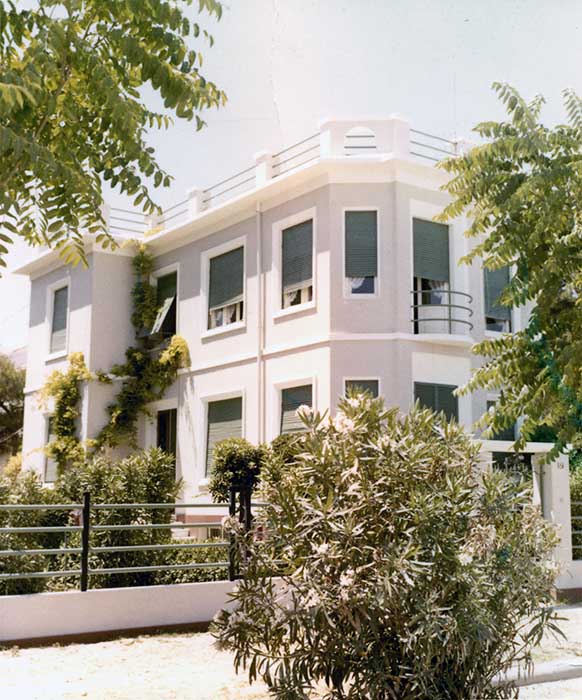
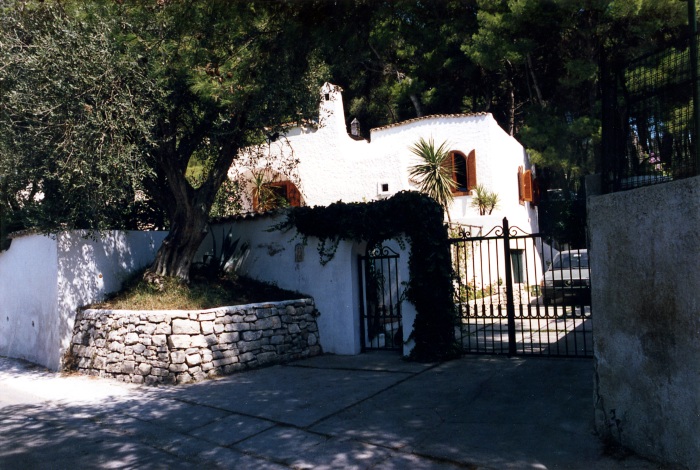
Andrea Pazienza was born on May 23, 1956 in his maternal grandparents’ house, overlooking the seafront of San Benedetto del Tronto, in the province of Ascoli Piceno, in the Marche region. The son of Giuliana Di Cretico (1928-2025) and Enrico (1926-1998), he spent his childhood between San Severo and San Menaio in Apulia, and San Benedetto del Tronto, together with his brother Michele and his sister Mariella.
The presence of his father, a highly talented watercolorist, was a constant stimulus and example for Andrea, nurturing the natural talent that was evident from his earliest years. In the drawings of Andrea as a child, carefully kept by the family, unusual perspectives, shapes, movements and framings already emerge.
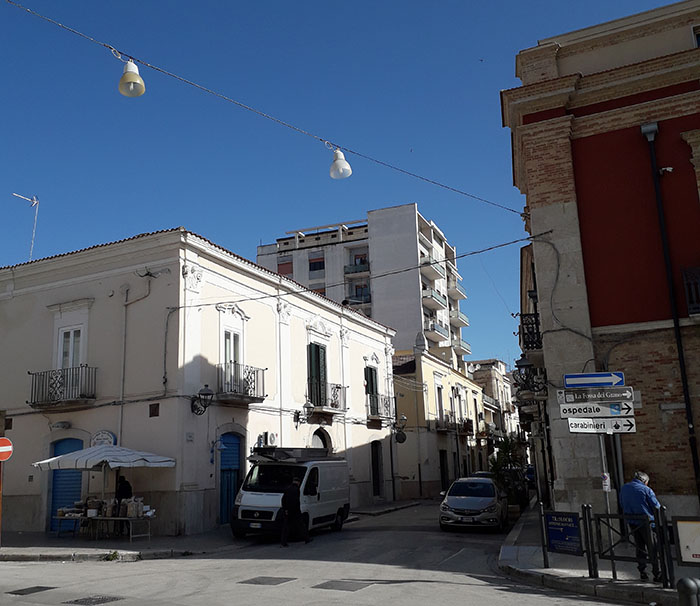
He attended elementary and middle school in San Severo, where his father Enrico was also his art teacher.
In 1969 he enrolled at the Liceo Artistico (art high school) in Pescara, moving into the Jesuit boarding school. It was there that he met Tanino Liberatore, who was to become one of his dearest friends and artistic companions.
However, still very young and rather shy and insecure, Andrea suffered deeply from being away from home. So he decided to attend his second year of high school in Foggia, but the experience was short-lived, and for his third year he did in fact return to Pescara.
1973 marked a decisive turning point in his life: Andrea turned into a more confident and swaggering young man. He did not return to the strict Jesuit boarding school, but chose to lodge first with a family in Pescara and then in a house near the railway, gaining new independence and freedom. In the same period he widened his circle of friends and met Isabella Damiani, a girl from Naples who would become his muse and a lifelong friend.
With his new teachers Sandro Visca and Albano Paolinelli, artists with a taste for experimentation, and the gallery owner Peppino D’Emilio, he founded the Laboratorio Comune d’Arte Convergenze. In this creative space he exhibited his works, mostly large-format paintings, taking part in several group and solo exhibitions. It was in these years that Andrea also began to give shape to his talent for comics, often choosing Visca himself as the protagonist of his works.

the years of the movement
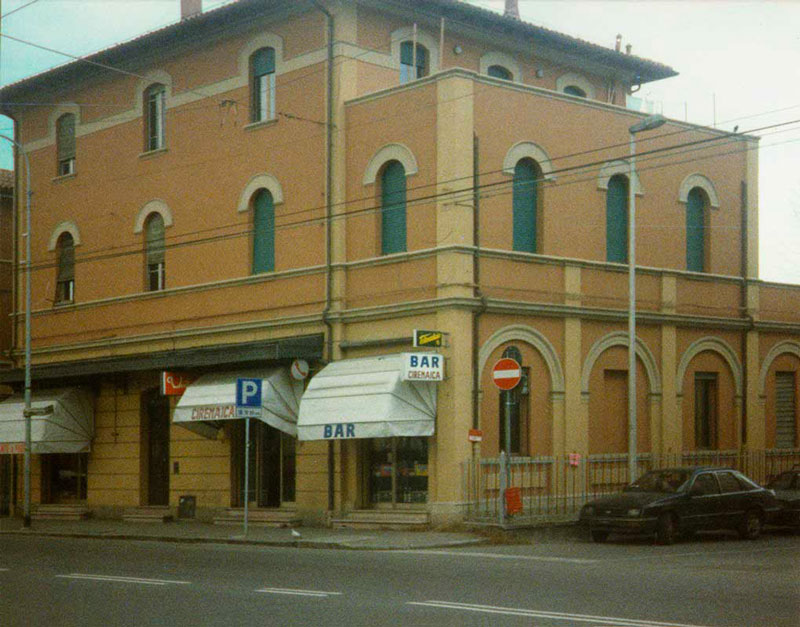
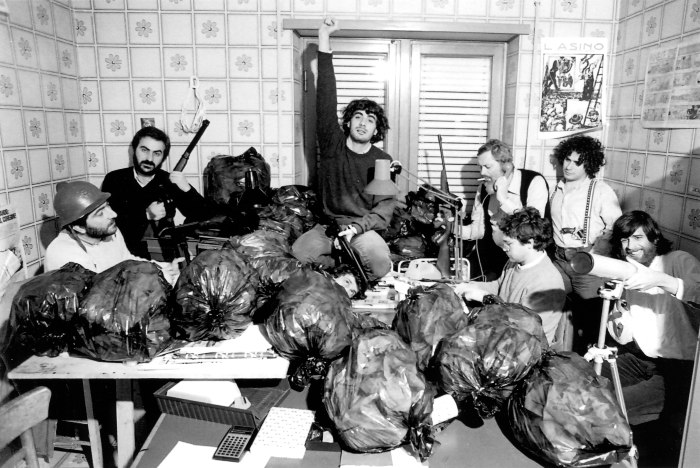
In 1974 Andrea enrolled at DAMS in Bologna, but until 1976 he kept close ties with Pescara. In Bologna, after lodging on via Galliera, at the end of ’75 he moved into the now-legendary house at via Emilia Ponente no. 223, which he would leave only in the spring of 1984.
These were the most heated years of the student movement, and Andrea, who was not a member of any political group, sided with the creative wing of the movement. From this experience came Le straordinarie avventure di Pentothal, his breakthrough in the world of comics. Its publication in Milano Libri‘s magazine Alter Alter (from April 1977 until 1981) was an immediate success, and at just twenty-one he was already a point of reference for his generation.
In 1977, with Stefano Tamburini, Tanino Liberatore, Filippo Scozzari and Massimo Mattioli, he launched Cannibale, an underground magazine whose title was borrowed from a French Dadaist paper.


the frigidaire years
From 1978 to 1981 he contributed to the satirical weekly Il Male. His satire was sharp, ruthless and never banal. Of all the politicians of the time, Andrea had a soft spot only for Sandro Pertini, who featured in a series of cartoons and covers, one of which earned the author an invitation to the Quirinale. The President would indeed become the protagonist of a comic book with stories and cartoons devoted to him.
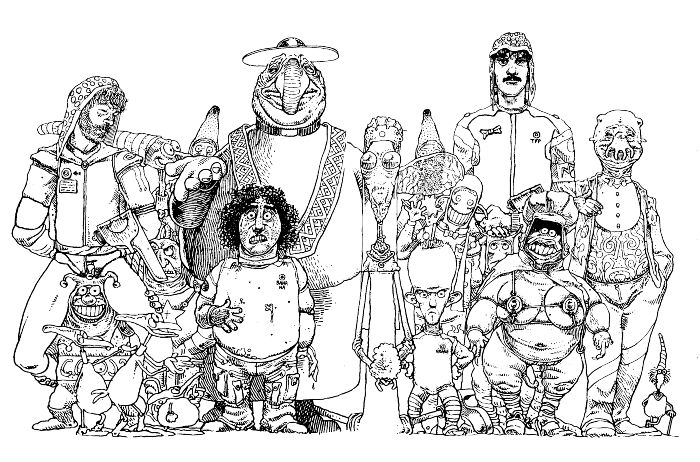
In 1983, Pertini came out as a supplement to the magazine Frigidaire (Primo Carnera Editore). Born from the ashes of Cannibale in 1980, edited by Vincenzo Sparagna and co-founded by Andrea, Frigidaire was destined to leave a deep mark on the world of comics and on Italian youth culture.
In the story Giallo scolastico (1981), also in Frigidaire, the character of Massimo Zanardi made his first appearance.
In 1983, Andrea renewed his ties with Milano Libri and published numerous stories in the publisher’s three magazines: Linus, Alter Alter and Corto Maltese.
In the 1980s his work as an illustrator was also very intense. He made film posters, such as the one for Federico Fellini‘s La città delle donne (1980), record covers, advertising campaigns, playbills and stage sets for the theater.
From 1985 to 1988 he worked with the association Lega per l’Ambiente creating posters, illustrations and short stories for the magazine La Nuova Ecologia.

the years in the countryside
In 1984, a year marked by drug problems and by the end of his long love affair with Elisabetta Pellerano, Andrea left Bologna and moved to Montepulciano, in the province of Siena. The town was home to the publishing house Editori del Grifo, run by his friends Mauro Paganelli and Paolo Barcucci, with whom he began a fruitful collaboration. After the first few months in an apartment in the old town, he moved to the countryside, to the La Manonera farm stay.
Even at a difficult personal time, his artistic output never stopped. These years saw the birth of stories of great intensity, such as Lupi, published in Corto Maltese in 1984, and La prima delle tre, which appeared in Alter Alter in 1985. Also in Alter Alter, that same year, the serialization of Pompeo began, a work in which he laid himself completely bare before the reader, tackling the subject of heroin and death without filters or reticence. The story would be published in full only in 1987, in the volume Pompeo. Fino all’estremo (Editori del Grifo).
Between 1985 and 1988, he produced numerous cartoons, illustrations and stories for various publications, including Tempi Supplementari, Tango, Zut, AVAJ and Frizzer. In the latter he also served as imprinter.
In 1985, Andrea met Marina Comandini, a young illustrator from Rome who would work with him as a colorist on some of his works. The two married in June 1986 in Montepulciano and moved to a farmhouse in the countryside, where Andrea would spend the last years of his life.


THE LAST YEARS
That same year Andrea began working with the monthly comics magazine Comic Art. A renewed interest in painting clearly emerges in some of the stories published in the magazine, including Zanna ma la vecchiezza è una Roma… and Campofame, the latter an adaptation of the poem of the same name by the American writer Robinson Jeffers
Also from 1987 are Zanardi medioevale, which remained unfinished, and Storia di Astarte, which would be published posthumously in Comic Art in July 1988.
On the night between June 15 and 16, 1988, Andrea died in his home in Montepulciano of a heroin overdose.
At that time he was preparing, together with his father Enrico, their first joint exhibition in Peschici, in the heart of the Gargano they both loved so much. The exhibition, set up by Enrico Pazienza, opened on July 21 of the same year.

Andrea is buried together with his father Enrico in the cemetery of San Severo, in Apulia.


Autobiographies
My name is Andrea Michele Vincenzo Ciro Pazienza, I’m twenty-four, I’m one meter eighty-six tall and I weigh seventy-five kilos. I was born in San Benedetto del Tronto, my father is from Apulia, I have a brother and a sister, aged twenty-two and fifteen. I’ve been drawing since I was eighteen months old, I can draw anything in any way. I’ve lived on my own for eleven years. I went to art high school, had about ten solo shows, and in seventy-four I became a partner in an art gallery in Pescara: Convergenze, a meeting and information center, a shared art workshop. Also in seventy-four I’m in the Bolaffi. Since ’75 I’ve lived in Bologna. From seventy-one to seventy-three I was a card-carrying Marxist-Leninist. I’m nearsighted, I have a slight squint, a few decayed molars that were never treated. I smoke very little. I shave every three days, I wash my hair very often and in winter I always wear gloves. I’ve had a driver’s license for six years but I don’t have a car. When I need one, I use my mother’s, a green Renault 5.
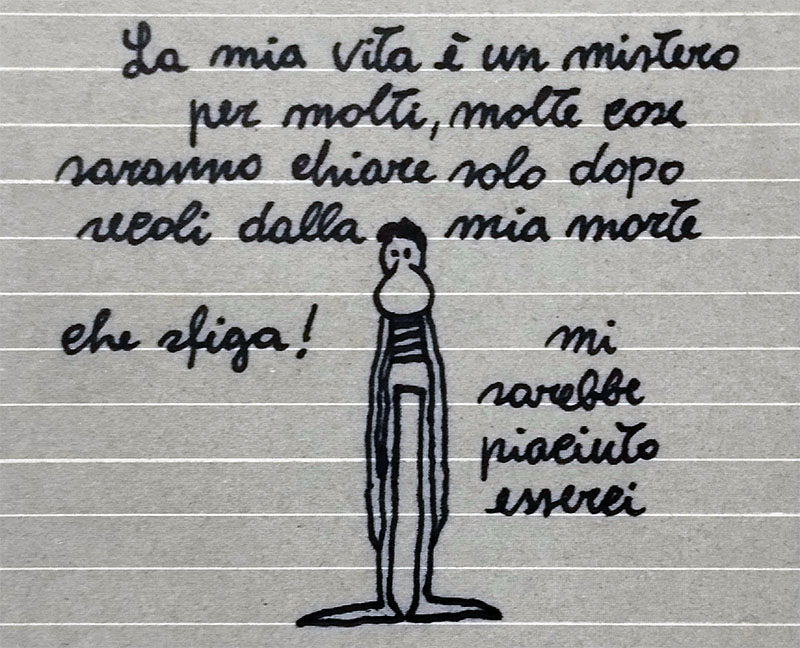
Since seventy-six I’ve been published in a few magazines. I draw little and reluctantly. I’m co-owner of the monthly Frigidaire; my father, also extremely listless, is the most remarkable watercolorist I know. I’m the best living draftsman. I love animals but I can’t stand looking after them. I will die on January 6, 1984.
Andrea Pazienza was born in San Menaio (Fg) and is practically from Apulia, although he lives between Bologna and New York.
186 cm tall, he attended the art high school in Pescara, soon revealing himself to be an enfant prodige. Cultured and brilliant, he plays many sports, none excluded. Like all Gemini artists he is a Gemini with Sagittarius rising. Cold and calculating, he has had exhibitions in Pescara, San Benedetto, Ascoli Piceno, Vasto Marina, Monte Silva and other towns on the Adriatic coast. After painting he devoted himself to comics, reaping success and dough.
As he likes to say, nothing is impossible for him, he just doesn’t really feel like it. His hobby is cycling, partly because he has no car and someone swiped his Vespa. He has been to England, France, Spain, Yugoslavia, Morocco, Switzerland and the United States.
He has contributed to Alter and to Male. He was among the founders of the magazine Cannibale and is currently an editor of the monthly Frigidaire. Being so young, 24, his career can certainly be called meteoric. Behind his frivolous, drawing-room manner he cleverly hides murky ties with the ’77 movement and other similar movements.
Biography of Andrea Pazienza updated to October three, eighty-four
Apaz was born in a comfortable villa on the Marconi seafront in San Benedetto del Tronto, on a fine day in May of fifty-six, and is therefore the same age as Miguel Bosè.
He pulls off crazy successes until twenty-three, twenty-four, always in the field of fine arts, with minimal effort, but when his family stops supporting him, first in Pescara, then in Bologna, he rolls up his sleeves and compromises himself for good. Undecided about hastily leaving Bo, he now lives in a small town in Tuscany.