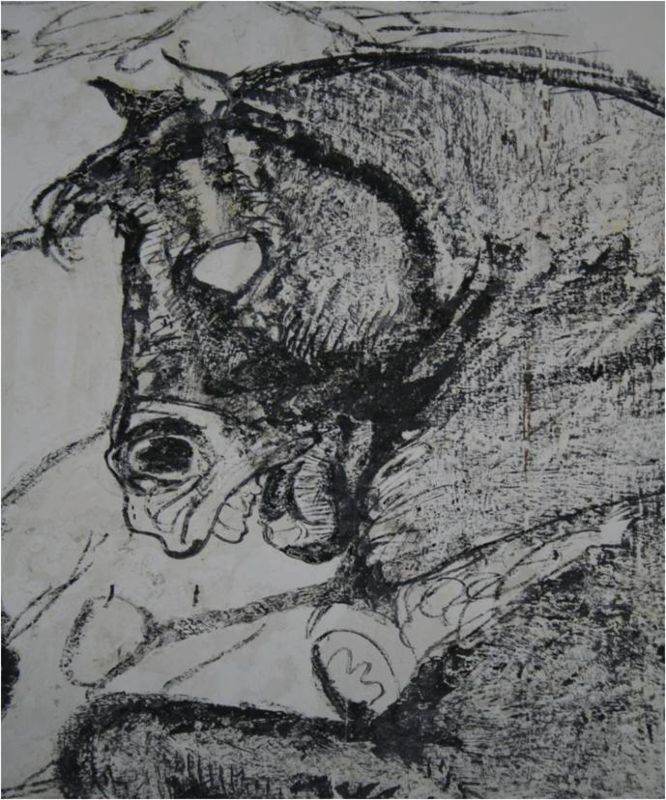
The battle of
Hoplites and animals
Hoplites and animals
Some years later, in 2010, to ensure the work’s preservation, the mural was “detached”, restored and placed in the Latin America Pavilion of the Mostra d’Oltremare, which houses the Enel Historical Archive.


Paz, a life in a mural | Guido Piccoli
Paz liked Naples. Unreliable and chaotic, just like him. He came every year in his last years. Mostly at the invitation of that Comics Fair which can rightly be called the father or mother of Comicon. An event where comics and comic artists really counted, without being smothered and sidelined by Cosplay costumes, as happens in these miserable times.
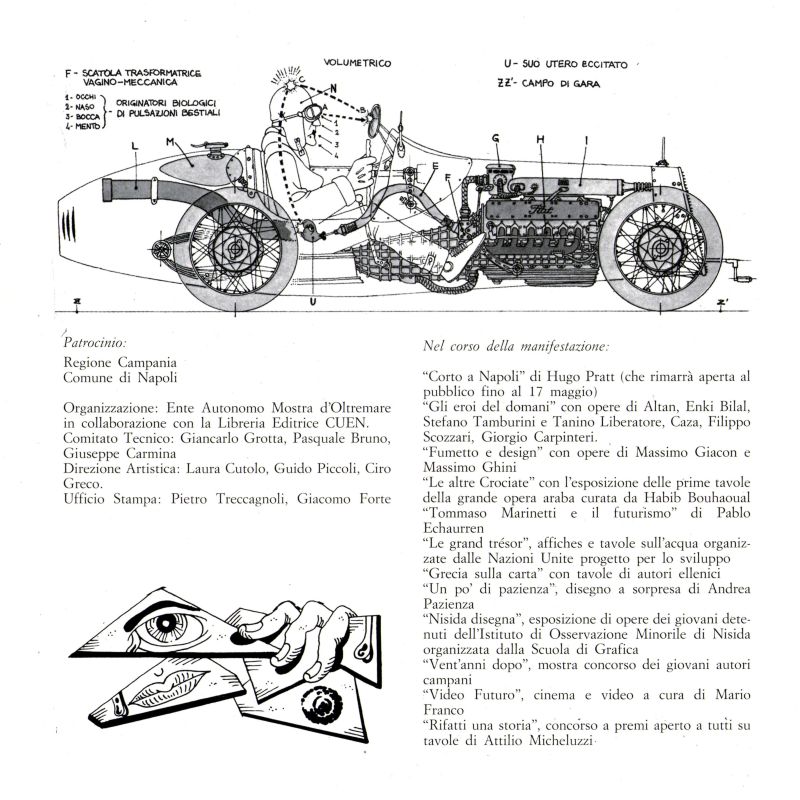
announces a performance by Andrea Pazienza
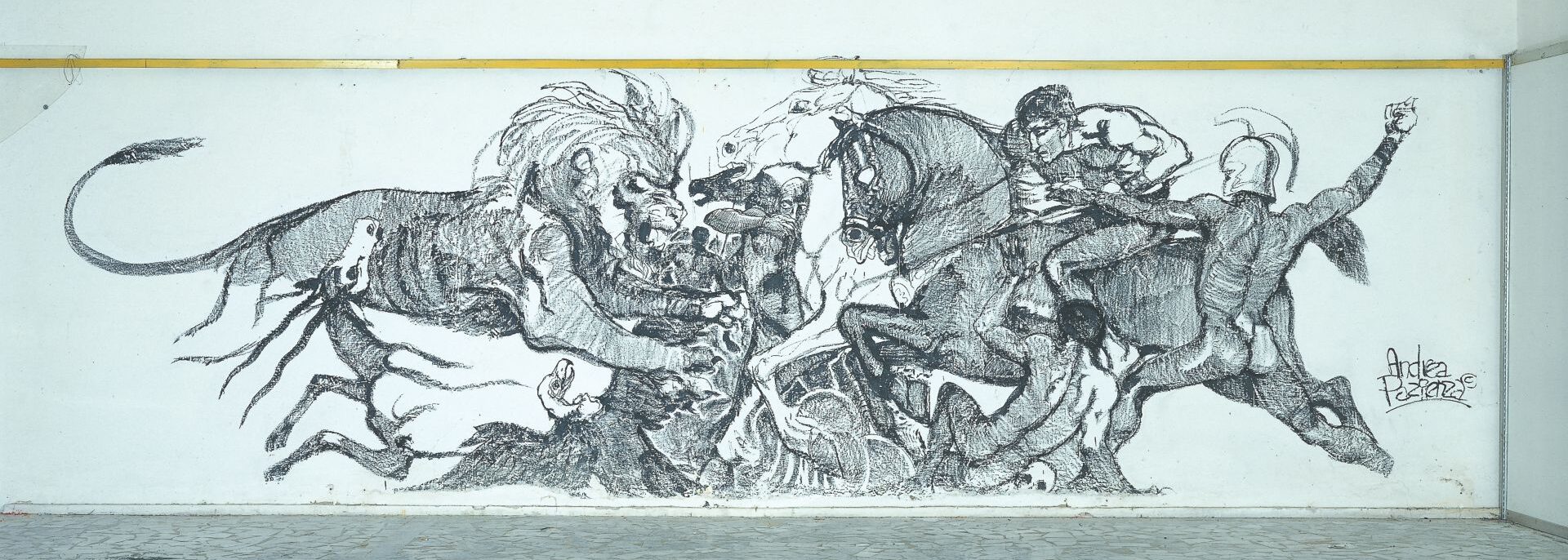
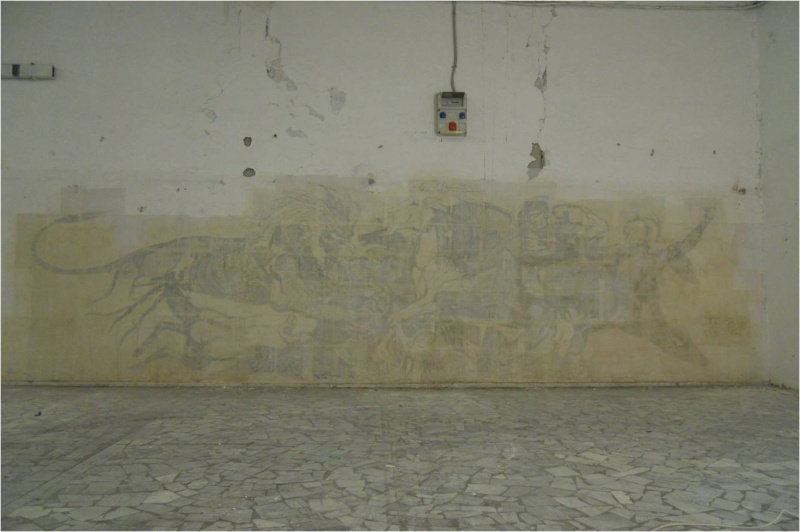
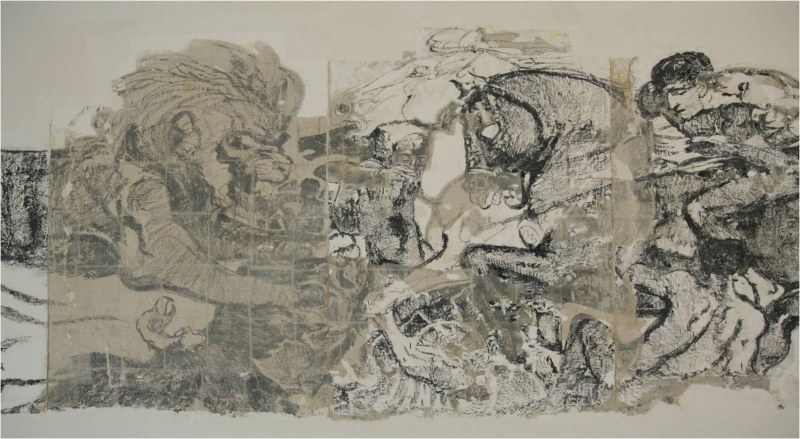
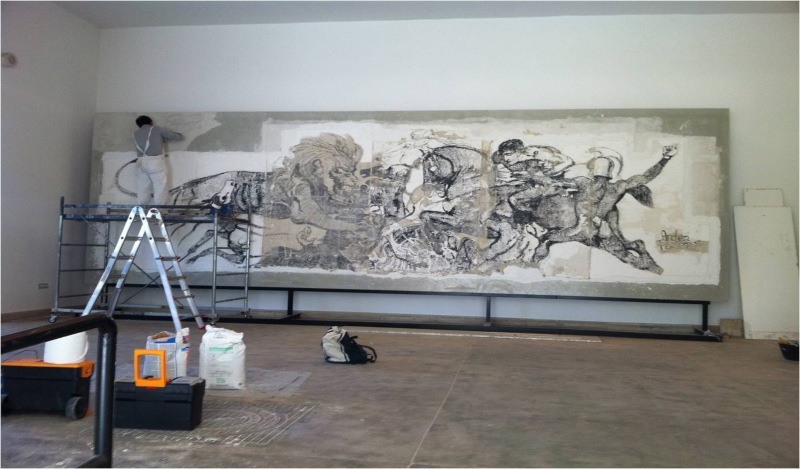
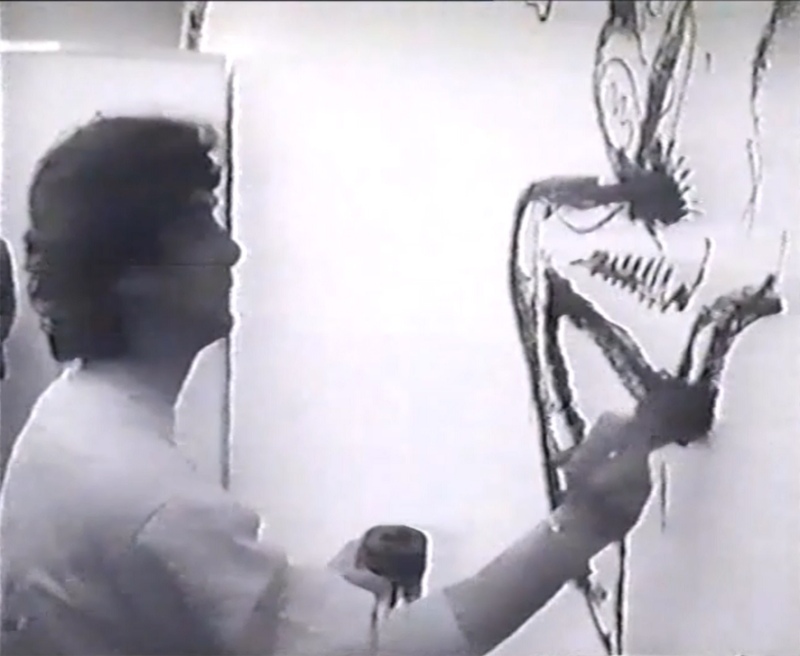
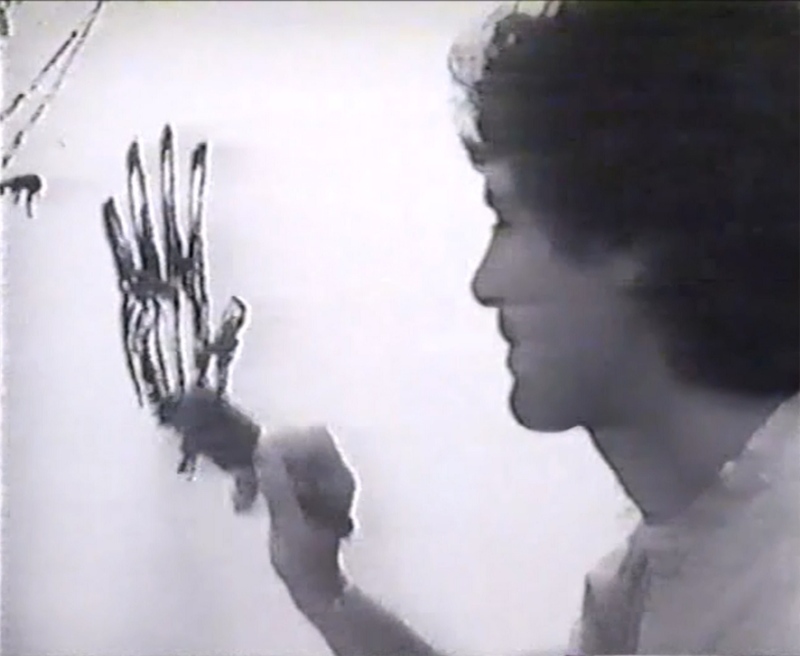
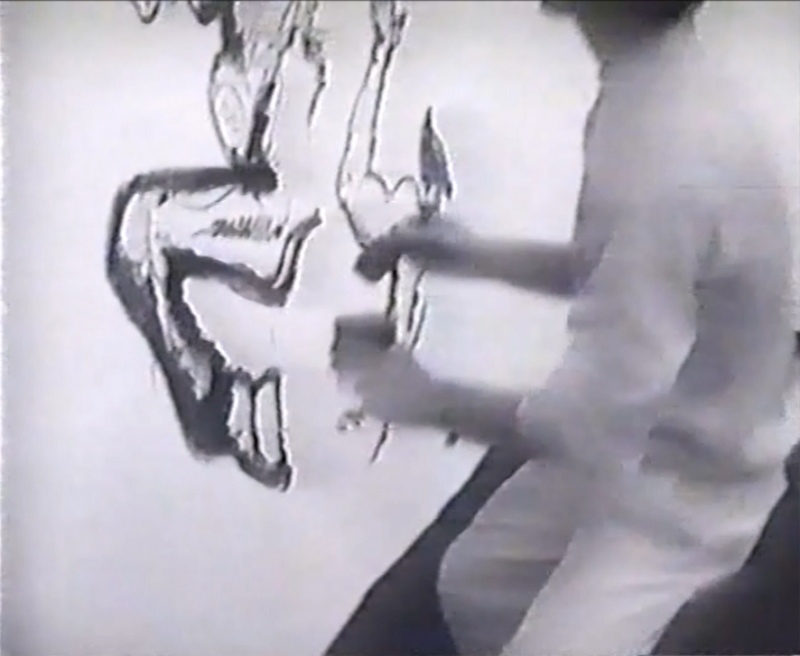
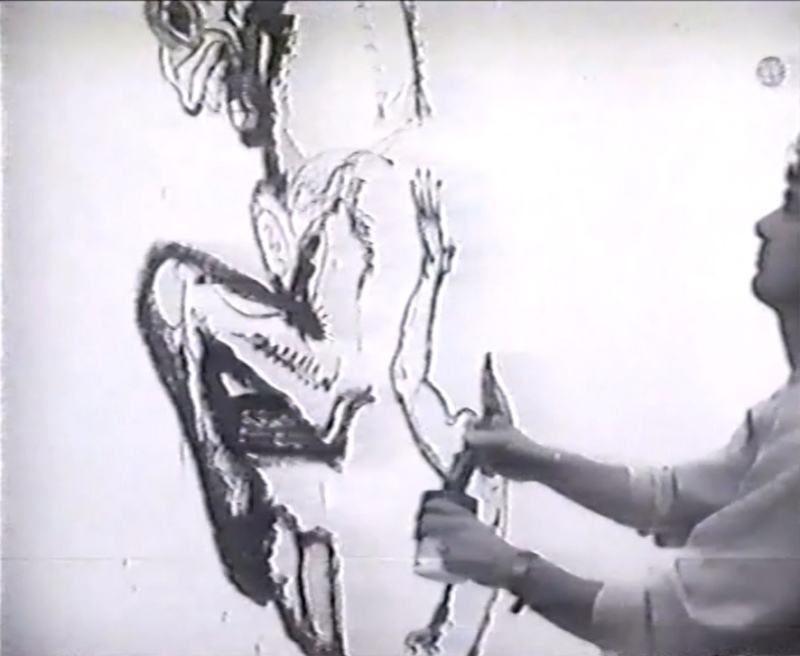
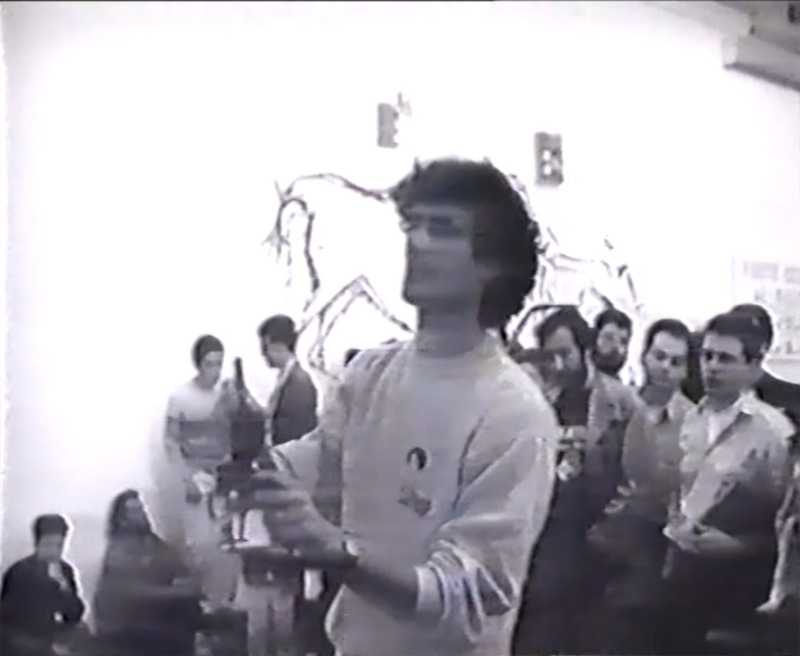
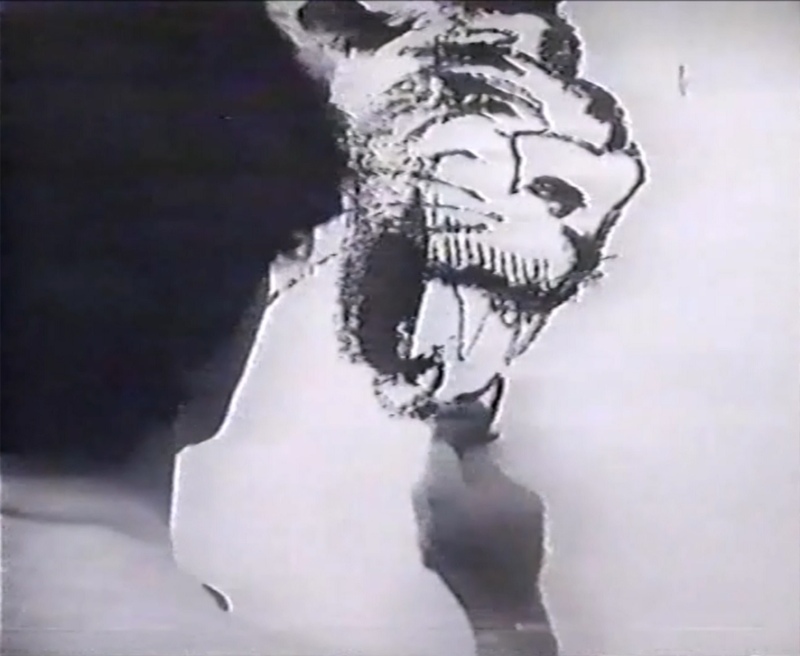
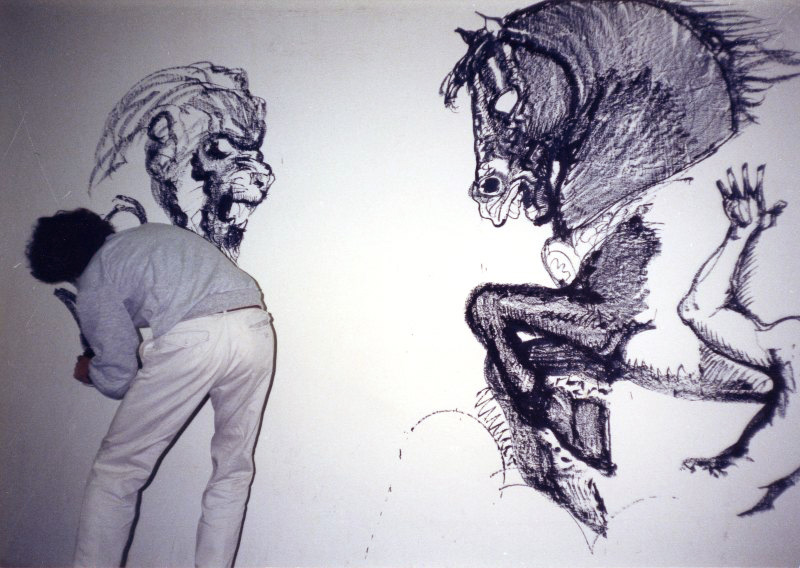
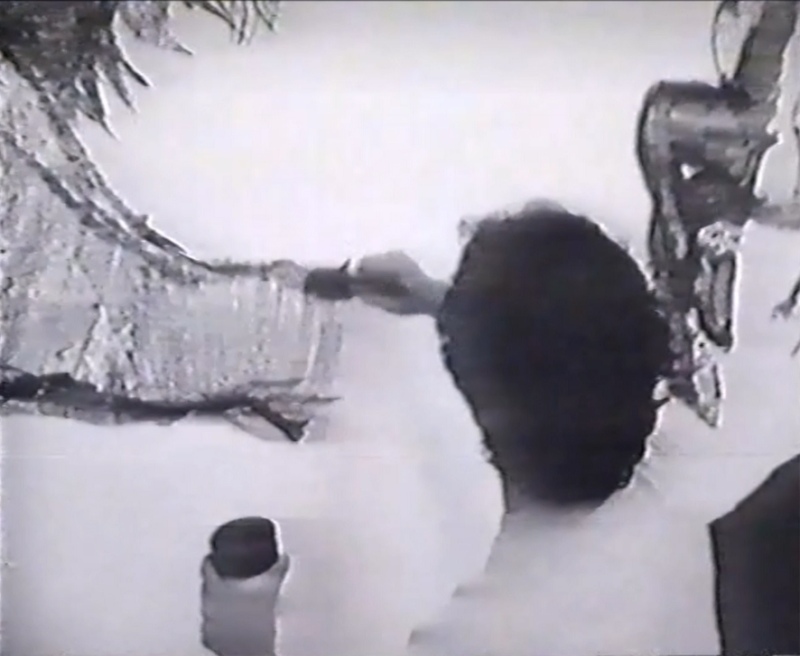
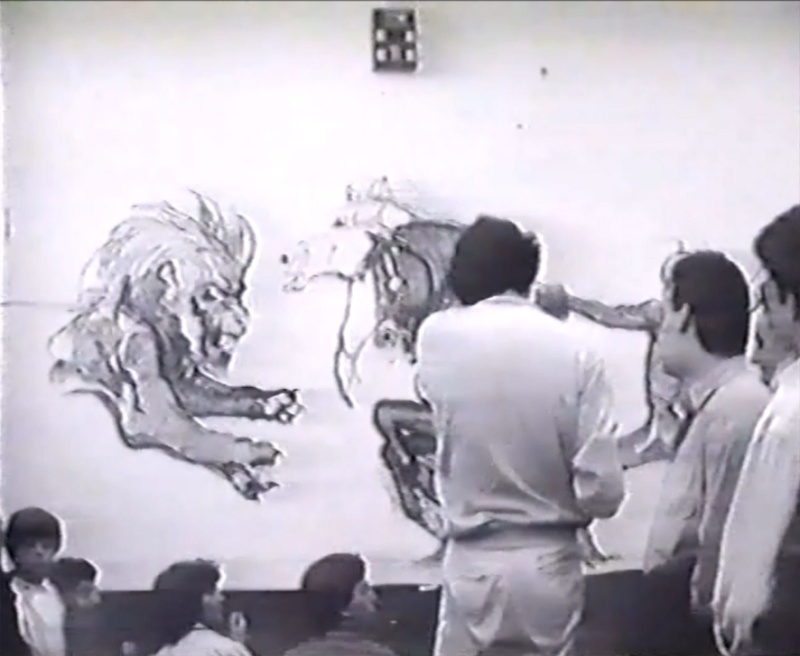
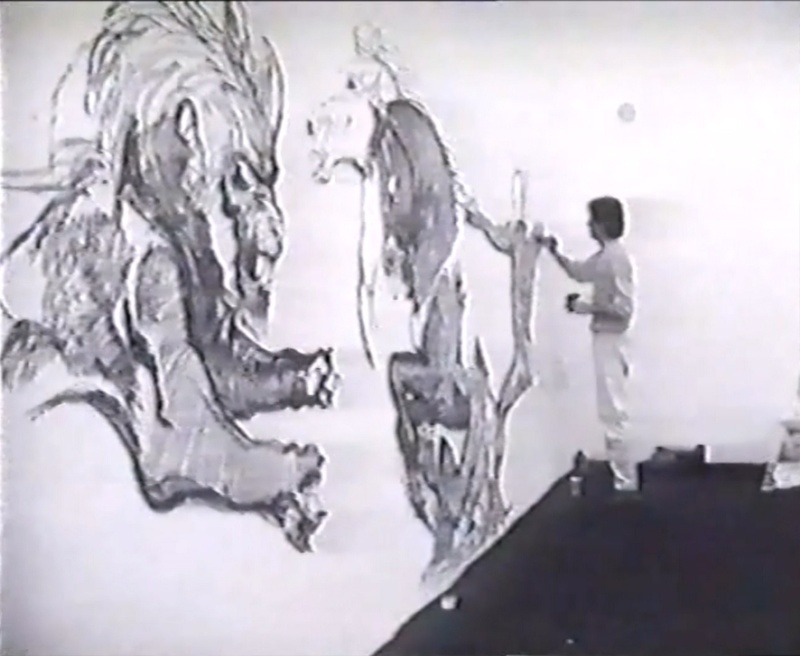
Before moving to the cramped and marvelous setting of Castel dell’Ovo, the Fair enlivened the springtimes of the vast, bare pavilions of the Mostra d’Oltremare. That year (it was 1987) Paz arrived together with Pratt and Manara, Bilal and Muñoz and many others. In short, the cream of European and perhaps world comics. «Andrea, you have a suite at the five-star hotel on via Caracciolo, facing the sea and the castle», we told him to lure and please him. And he came and, typically for him, went to the wrong hotel, ending up in the one next door, just as beautiful and terribly expensive (but those were the famous ’80s of “spend, spend, spend”…). As co-director of the Fair I found out a couple of days later, when he had already caused various mishaps with the Jacuzzi and, like a real star, completely emptied the well-stocked minibar. Scolded without frills (given our level of friendship, too), Paz wanted to make amends, and so it was that, on a Saturday afternoon, he decided to show his very best by painting that marvelous mural on the wall of a shabby pavilion. He made that seven-by-three-meter fresco, depicting a battle among men, lions, tigers, vultures, antelopes, horses and whatever else, using big markers and brushes. All without a break, without stopping to check, without stepping back to take measurements, without imagining an ending. And he did it in front of a silent and astonished crowd of admirers, among them Tanino Liberatore and Milo Manara (who that year had come down from S. Ambrogio di Valpolicella to Naples in his camper van, just to make a triumphal entrance into the pavilion devoted to “HP and Giuseppe Bergman”). That is how one of the masterpieces of contemporary art was created, which only some fifteen years later was rescued and moved to a more dignified and safer space, still within the Mostra (though it would deserve something better still). That battle looks like a snapshot of his short life. A great melee made of contradictions and interlocking pieces, lived without a break, without thinking it over, without stopping to reason. Without imagining the ending that would arrive, punctual and relentless, not even a year later, in Montepulciano on the night of June 16, 1988.
Frames from the video by Luigi Bontà Polito
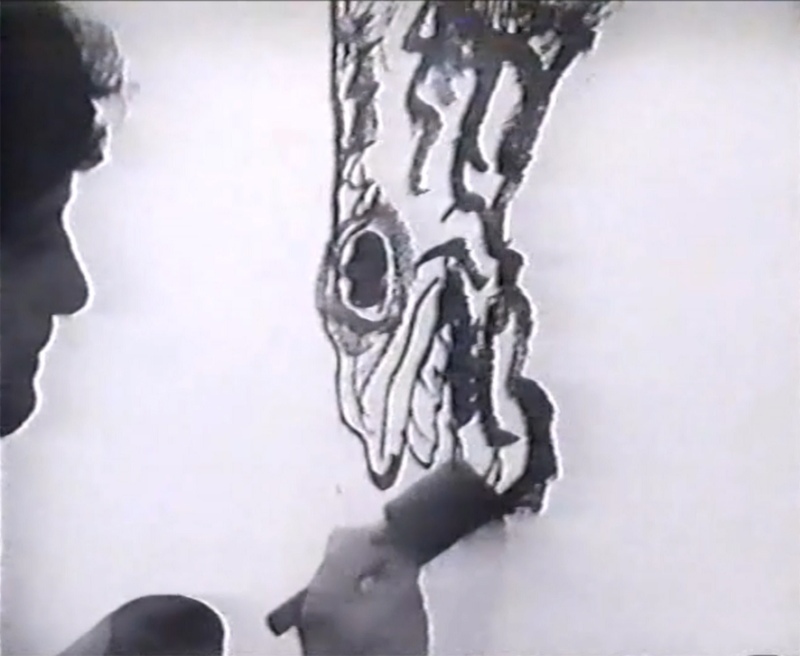
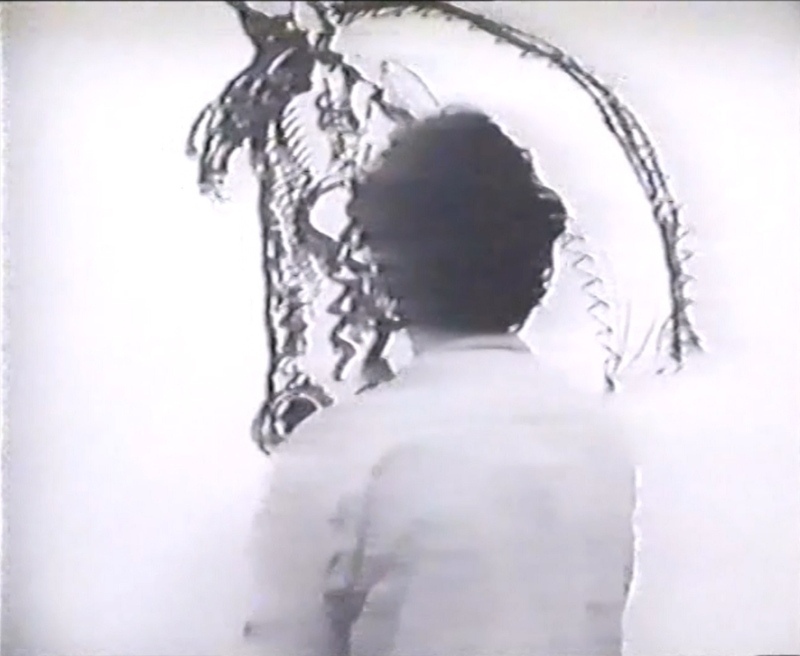
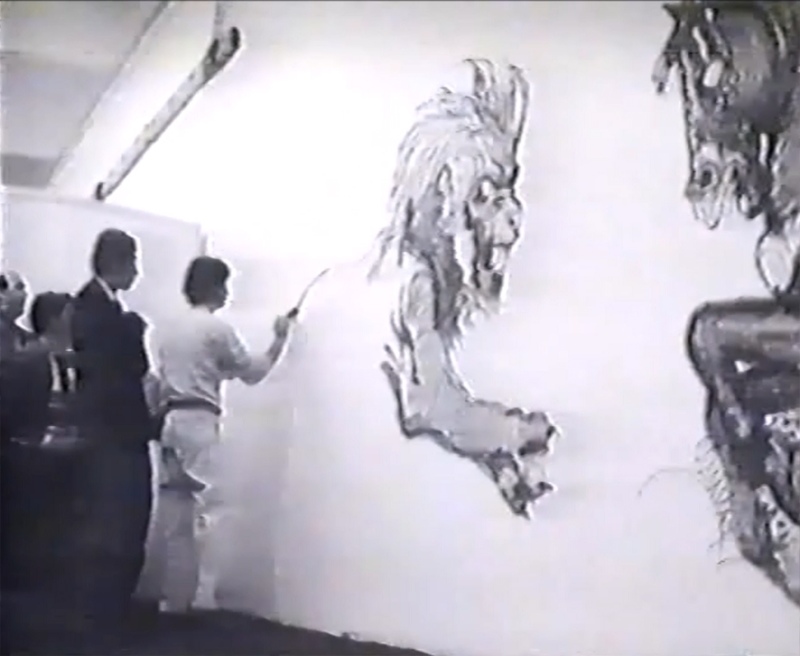
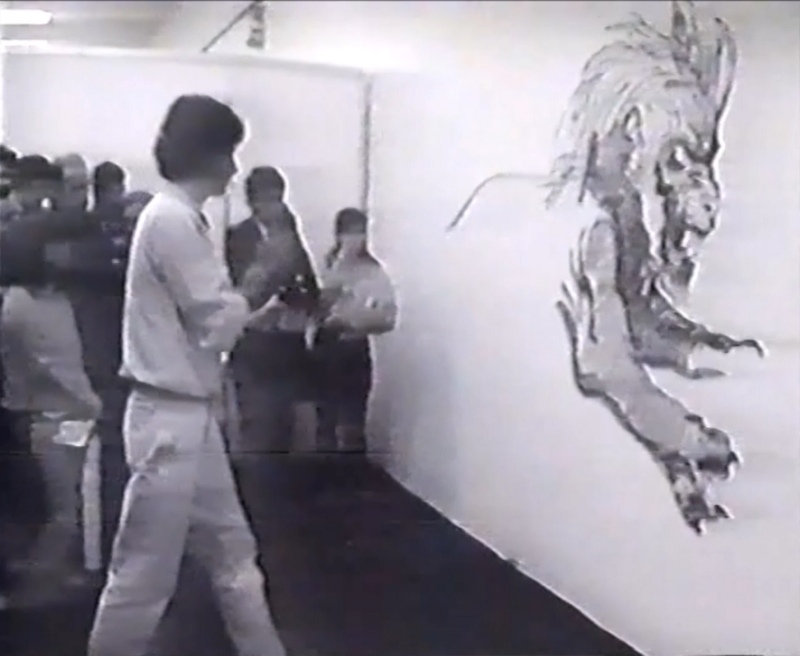
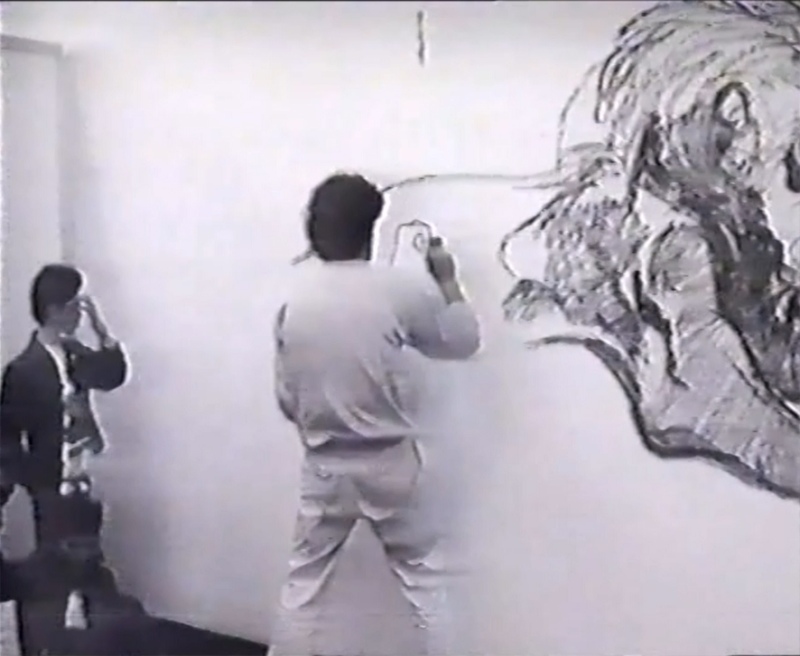
The restoration of the mural | Michele Mordente
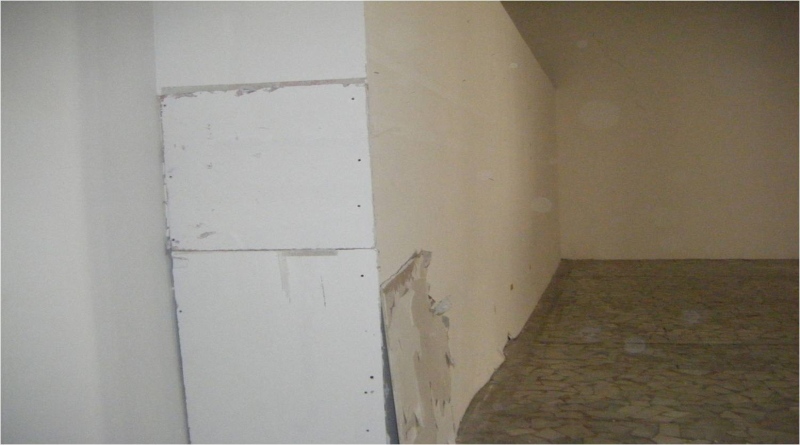
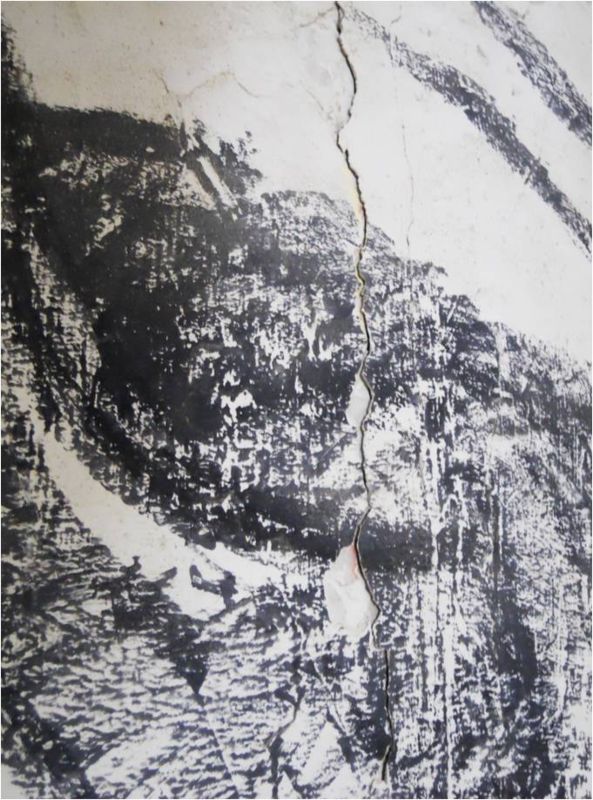
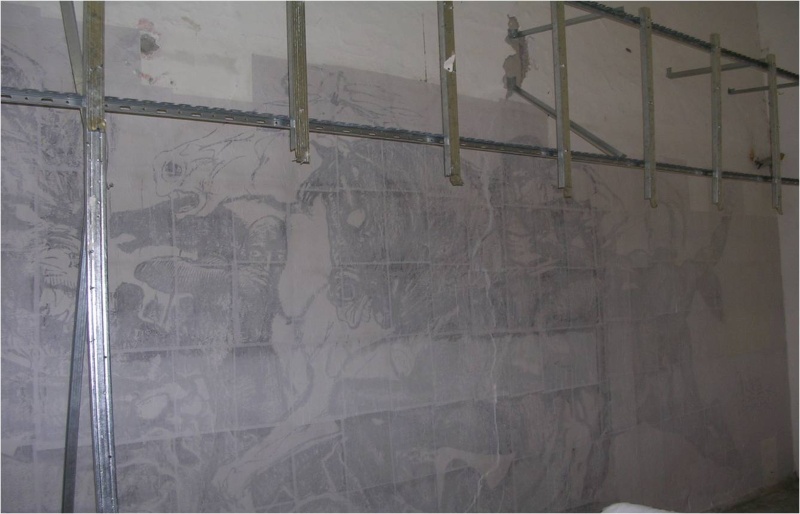
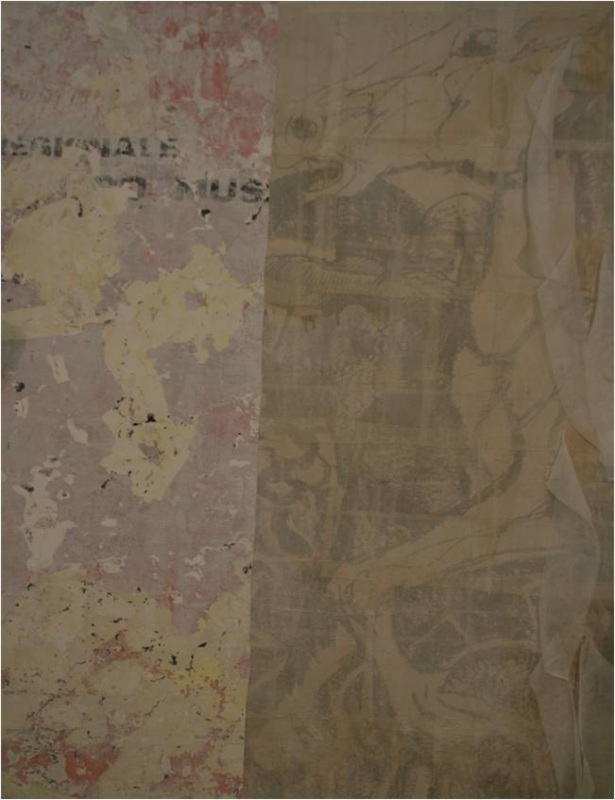
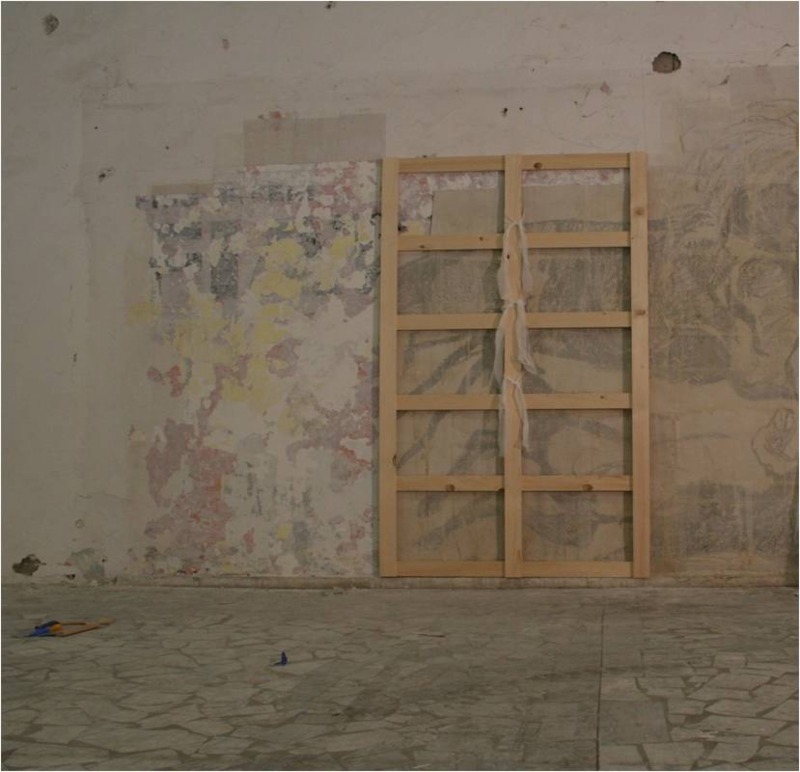
In early 2010, while the young Neapolitan restorers Barbara Balbi and Annalisa Milella were working on some restorations inside the Mostra d’Oltremare, they learned of the existence of a mural painting by Andrea Pazienza in one of the exhibition pavilions. Architect Rosanna Milano showed them where the work was, hidden and protected by a sort of box made of plasterboard panels. After removing some of them, the restorers found the work in a state of extreme decay due to deep cracks in the plaster that had caused parts of the surface to fall off. The restorers immediately set about obtaining the necessary authorization to restore the painting and the funds to cover the cost of materials and of the new support structure, after establishing that, to preserve the work, it had to be detached from its original wall.
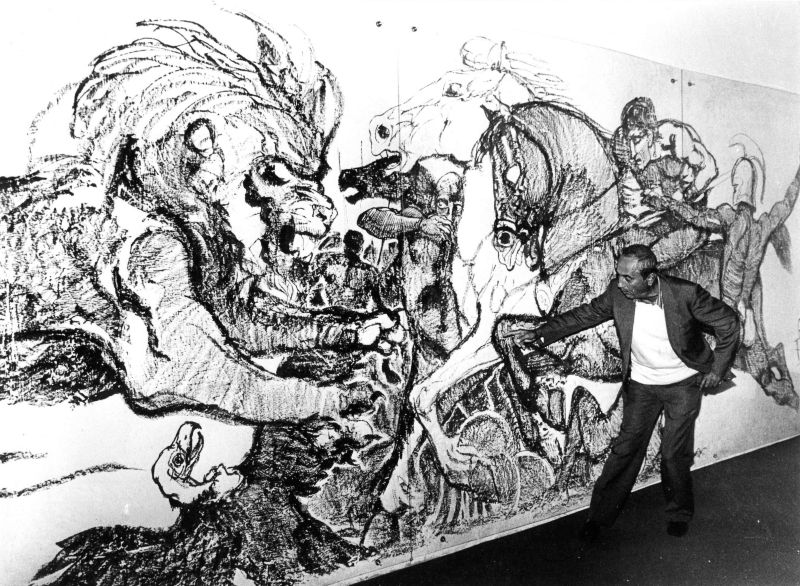
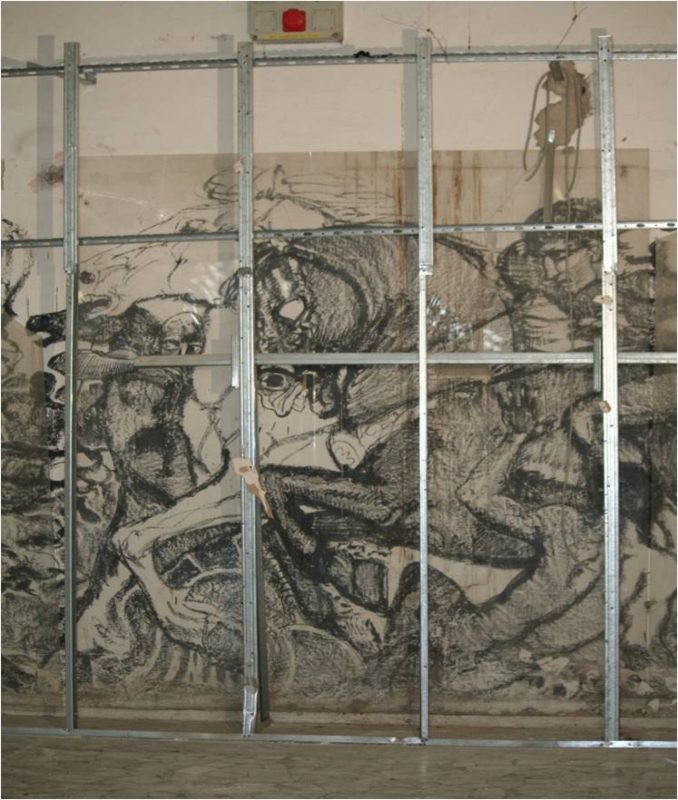
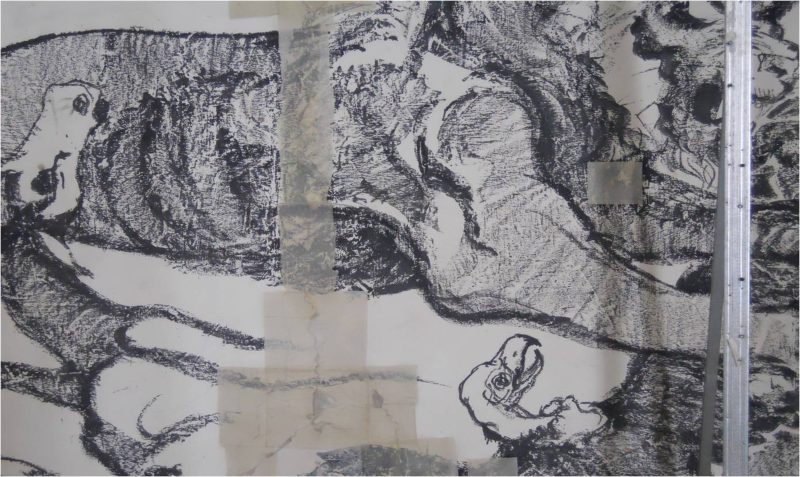
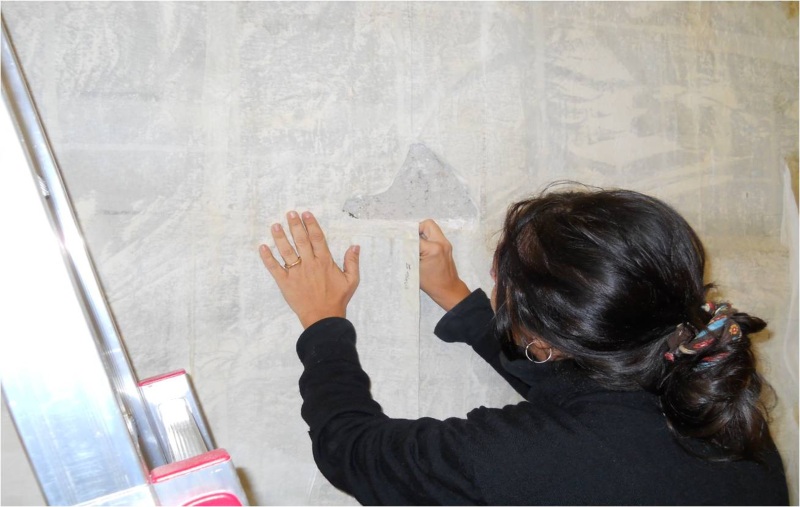
In the spring of 2010 the restoration finally began, under the direction of architect Marisa Zuccaro, technical architectural director of the Mostra d’Oltremare until 2013. The preliminary operation, needed to secure and protect the parts of the surface at risk of detaching, is the facing, that is, the application of thin sheets of Japanese paper with an acrylic resin. Next came the first actual restoration step: consolidating the fine plaster layer with a product based on ventilated mortars. Then, to ensure the stability of the paint layer, the entire surface was faced with medium-weight Japanese paper applied with resin at a low water dilution. To carry out the so-called “strappo” (detachment), the entire surface of the work was given a double bandaging with animal glue, an adhesive of animal origin that penetrates deeply and makes the plaster thick and elastic. Then came the delicate operation of detaching the surface layer of plaster from the load-bearing wall. Because of the work’s considerable size, the surface was divided into several sections. The painted plaster, detached from the wall, was fixed onto a new support of fiberglass panels with an internal honeycomb structure, at once sturdy and light, previously covered with a bed of mortar. But not before the back of the detached plaster had been cleaned and thinned. The panels were then fixed to a solid metal support structure designed by architect Milano. After carefully removing the protective facing, the gaps in the fine plaster were filled with mortars of the same color and grain size. The fillings and the gaps in the paint film were then color-matched with restoration watercolors. Finally, after work lasting many months, Andrea Pazienza’s battle was restored to its original splendor and can once again be offered to his devoted public, in the Latin America Pavilion of the Mostra d’Oltremare, thanks to the tenacity and skill of the two Neapolitan restorers.
Images from the restoration